
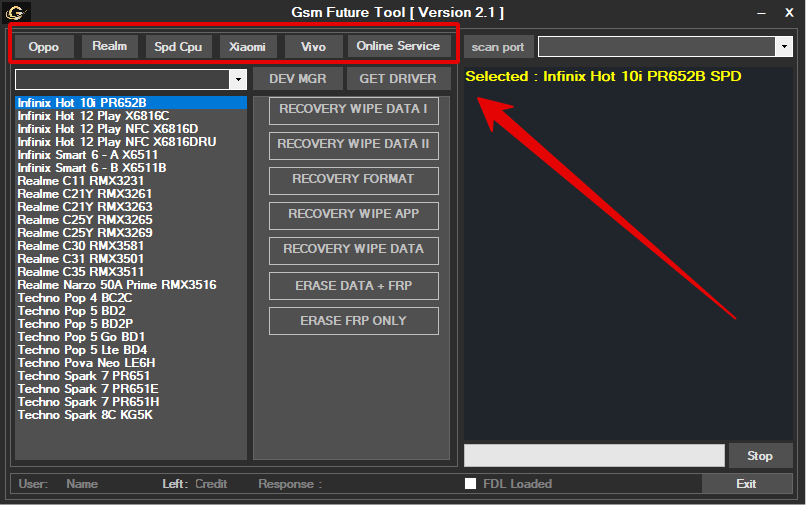
Overview: Why Technicians Search for “GSM Future Tool V2.1 No Need Login FREE Download 2025”
Many repair technicians search for tools like “GSM Future Tool V2.1” because they need fast, Windows-based utilities for SPD (Spreadtrum) chipset servicing, especially on Oppo and Realme devices. Common desired features include firmware flashing, IMEI repair (where permitted by law), calibration, format/factory reset, and partition backup/restore. In 2025, technicians must balance speed with legality and device security — so we recommend authorized utilities, firmware repositories, and workflow best practices rather than unvetted “no login” downloads.
Table of Contents
Key Features Professional Technicians Require
When evaluating any GSM/repair tool for SPD devices, we prioritize tools and workflows that offer:
- Reliable Firmware Flashing — safe, verified stock firmware handling with clear checksum verification.
- Backup & Restore — full userdata and EFS partition backups (when legally permitted).
- Device Diagnostics — logs, crash dumps, and chipset-level info to speed troubleshooting.
- Safe Boot Modes Support — detection and handling for normal boot, recovery, and legitimate service modes.
- Audit Trails & Logging — transparent logs for accountability and quality control.
- Compliance Controls — safeguards preventing unlawful tampering with secure elements or owner locks.
These features let repair shops increase throughput while staying compliant with laws and manufacturer warranties.
Trusted, Legal Tools & Resources for SPD (Spreadtrum) Devices
We always recommend using official or widely-recognized repair utilities and vendor resources. Examples of legally safe resources include:
- OEM Service Tools & Firmware Portals — contact Oppo/Realme official service channels or authorized parts distributors for stock firmware and authorized repair tools.
- Spreadtrum/Unisoc Official Tools — for chipset-level diagnostics and firmware that are officially distributed to authorized service centers.
- Open-Source Utilities for Diagnostics — community projects that focus on logging and non-intrusive diagnostics (ensure you never use them to bypass locks).
- Authorized Repair Management Platforms — tools that manage jobs, firmware inventory, and service history while integrating with approved firmware sources.
Using official channels reduces the risk of bricking devices and keeps warranties and legal protections intact.
Safe Workflow for Repairing Oppo & Realme SPD Devices
- Verify Ownership & Consent — confirm the device owner and obtain written consent for any repair that may alter security settings or data.
- Document Device State — photograph IMEI labels, record current firmware and boot status, and note visible damage.
- Backup Before Any Operation — when possible, perform full backups of user data and the EFS partition.
- Use Verified Firmware Only — check manufacturer checksums and version history; never flash untrusted or unknown firmware.
- Prefer Read-Only Diagnostics First — gather logs and crash dumps before any write operations.
- Log All Steps — maintain an audit trail with timestamps and technician initials for transparency.
- Restore & Test — after service, restore backups, reboot cyclically, and run hardware/function tests (Wi-Fi, modem, sensors).
Comparing “No Login” Tools vs Authorized Solutions
Search terms that emphasize “no login” tools often promise convenience, but convenience can cost you:
- “No login” tools may: lack verification, contain malware, or enable actions that void warranties or violate laws.
- Authorized solutions provide: firmware integrity, vendor support, and compatibility updates — essential for consistent results across batches of devices.
We recommend prioritizing reliability, security, and vendor backing over one-off convenience.
Legal & Ethical Considerations for IMEI and Lock-Related Work
Any technician working with IMEI adjustments, network locks, or FRP must adhere to local laws and carrier policies. We advise:
- Never alter IMEI except where explicitly permitted and documented by the device owner and local law.
- Handle FRP and owner locks only with proof of ownership and use manufacturer or carrier-sanctioned procedures.
- Keep records of owner consent and repair justification if a locked device is serviced.
Optimizing Your Workshop for SPD Device Repair (Tools & Practices)
- Indexed Firmware Library — maintain an internal, versioned repository with checksum metadata and device model mapping.
- USB Interface Hygiene — high-quality cables, powered hubs, and ESD-safe benches reduce connection errors.
- Standardized Imaging & Test Suite — reuse preconfigured test images and scripts for quick functional checks post-flash.
- Continual Training — regular briefings on chipset updates, firmware changes, and authorized repair procedures improve outcomes.
Troubleshooting Common SPD Issues Without Risky Tools
When SPD devices exhibit common failures (bootloop, soft brick, modem faults), follow safe troubleshooting:
- Boot logs & recovery mode — gather logs using read-only tools or vendor diagnostic interfaces.
- Reflash verified stock firmware — using vendor or verified community images with clear checksums.
- Check hardware first — often, boot issues relate to hardware damage (battery, eMMC) rather than firmware. Replace or test components before advanced firmware steps.
- Escalate to OEM support — if flashing fails or partition issues occur, contact official support or authorized engineers.
These steps avoid risky operations that could cause irreparable damage.
How to Find Legitimate Firmware & Updates
We recommend these practices when sourcing firmware:
- Official vendor portals and authorized reseller portals.
- Manufacturer service centers — request firmware or tools directly when you have certified status.
- Community forums with strict verification — rely only on community repositories that publish signatures and checksum verifications.
- Avoid “cracked” or “no login” packages — they may remove safeguards and introduce instability or legal risk.